
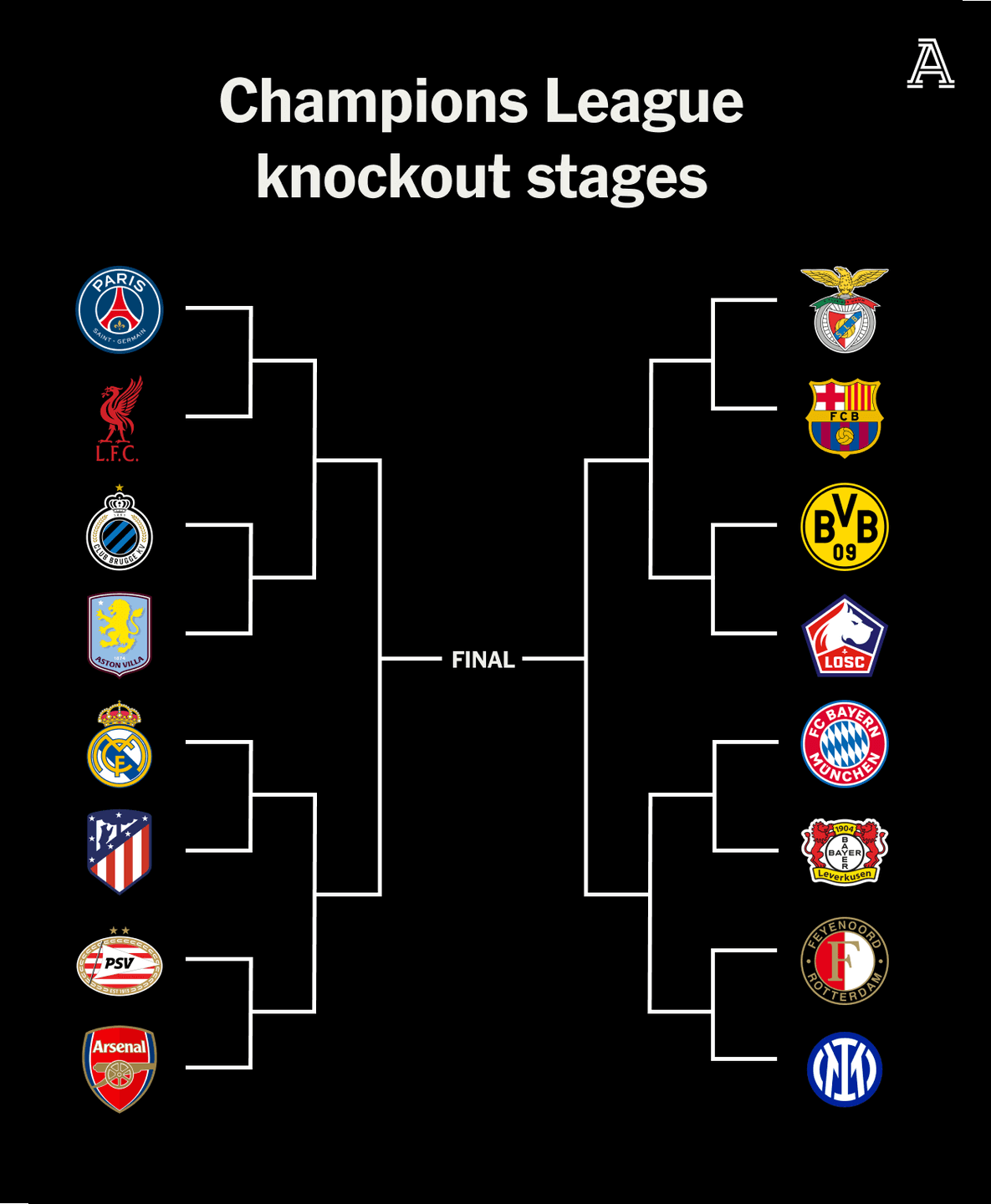
The UEFA Champions League round of 16 concluded on Wednesday night, delivering high drama, emphatic scorelines, and a few uncomfortable truths for Europe’s elite.
From the underwhelming showing of English clubs to Real Madrid’s ruthless efficiency and the continued targeting of Vinicius Jr, here are three defining takeaways from the knockout stage.
EPL dominance fades when it matters
The Premier League’s much-celebrated depth failed to translate into knockout resilience. Despite all six English clubs advancing from the league phase, their round-of-16 performances exposed structural fragility.
Not a single EPL side won the first leg of their ties, with three suffering heavy, multi-goal defeats. Ultimately, only Liverpool and Arsenal progressed to the quarterfinals.
The defensive collapses were particularly alarming. Chelsea and Newcastle United conceded eight goals each across their ties, raising serious questions about tactical balance and game management at the highest level.
For a league that brands itself as the best in the world, this is a moment that demands introspection rather than rhetoric.
Real Madrid: pedigree, not luck
Labeling Real Madrid as “lucky” has become a reflex, but their dismantling of Manchester City tells a different story.
A commanding 5–1 aggregate victory included a dominant 3–0 first-leg performance that could have been even more decisive. While Thibaut Courtois and Andriy Lunin delivered key saves, Madrid’s control of decisive moments was unmistakable.
Even with missed chances—including a penalty from Vinícius—Madrid dictated the terms. This is not variance; it is institutional excellence.
With five titles in the last decade, their continued success is rooted in mentality, squad depth, and an unmatched ability to execute under pressure. Beating Madrid in this competition requires more than outperforming them statistically—you must outmatch them psychologically.
Vinícius Jr punished for brilliance
Vinicius junior one of football’s most electrifying talents—and one of its most targeted figures.
Following his Ballon d’Or snub in 2024, he has faced persistent hostility across European grounds, including racist abuse and coordinated taunting. The situation escalated again during Madrid’s clash with SL Benfica, alongside similar incidents involving Manchester City supporters.
His “cry baby” celebration after scoring was framed as provocation, yet it came after sustained abuse—including banners mocking his Ballon d’Or loss to Rodri.
This pattern reflects a broader issue: elite players, particularly expressive ones, are often held to a different standard than those targeting them. The normalization of “banter” as a shield for abuse is no longer tenable.
If football’s governing bodies are serious about player protection, sanctions must become more immediate, more severe, and more consistent—especially in cases involving racism.
Conclusion
The round of 16 has reinforced three realities: the Premier League is not immune to decline in Europe, Real Madrid’s dominance is engineered—not accidental—and Vinícius Jr.’s treatment highlights a systemic failure the sport can no longer ignore.
The competition only intensifies from here—but so too do the questions it has already raised.